A fire door is a door and a frame working as one unit. Take away one small part and it stops doing what it was tested to do.
So we go through the same list on every door.
1. The label or plug
Certified doors often carry a plug in the edge or a label. It tells you the door has been tested and sometimes what rating it has.
Older doors may have lost it, or been painted over. If we cannot find one we write that down. It does not mean the door is bad. It means there is no evidence on the door.
2. Gaps
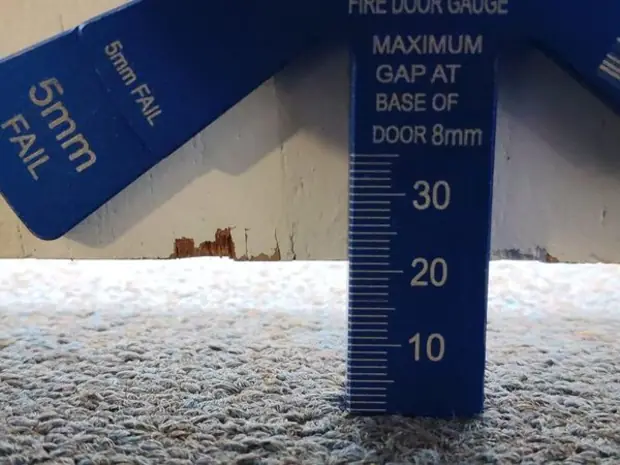
The gap between the door and the frame should usually be 2 to 4mm along the top and sides. Too tight and the door sticks. Too wide and smoke and fire get through.
We use a gauge, not a guess.
The gap at the bottom needs measuring too. Carpet laid after the door was hung is a classic cause.
3. Hinges
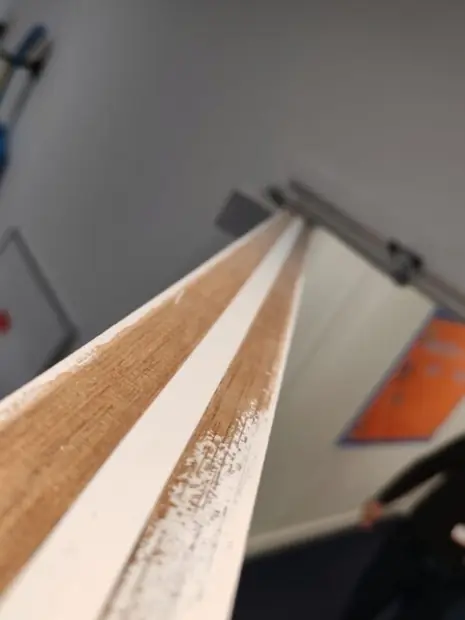
Usually three, of a type suited to a fire door, with every screw in. A missing screw on the top hinge can drop the whole door.
4. The closer
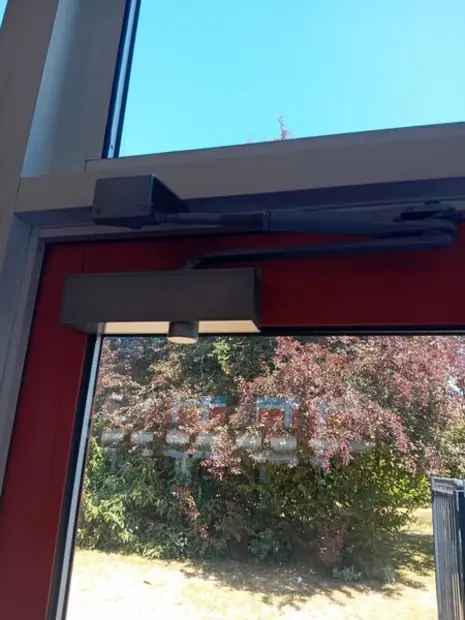
We open the door fully, let go and watch. It should shut firmly and latch without help.
Two things go wrong most. The closer has been turned down so it does not slam. Or it has been removed, and a wedge put in instead.
5. Seals and strips
Intumescent strips swell in heat to close the gap. Smoke seals stop cold smoke. Some doors have one strip doing both jobs.
We look for strips that are damaged, painted over, missing or cut around a lock.
6. The leaf itself
Holes from old locks, letterboxes cut in later, kicked-in panels and worn edges. Anything fixed with filler goes in the report.
On two secondary schools and an almshouse in Luton, 140 of the 147 doors were repaired on site rather than replaced.
7. Glazing
Fire-rated glass in a fire door is usually marked on the corner of the pane. The beads that hold it should be intact and the right type.
8. Signs and locks
Fire door keep shut signs where they belong. Locks and latches that release without a key on escape routes.
What we do not check
We do not look at the walls, alarm system or escape routes. That is a fire risk assessment.
Questions we get asked
Do you take the door off to check?
No. We check what can be seen and measured with the door in place.
Do you test the glass?
We read the marking and check the beads. We do not test the glass itself.
Send us the postcode and a rough door count and we will come back with a price.
Get a price